Beef Cuts Diagram PDF: A Comprehensive Guide
Navigating the world of beef requires understanding various cuts‚ aided by detailed diagrams often found in PDF format. These charts illustrate primal and subprimal cuts.
Understanding beef cuts can seem daunting‚ but visual aids like beef cuts diagrams‚ frequently available as PDF downloads‚ simplify the process. These charts detail the various sections of a steer – primal cuts like chuck‚ rib‚ loin‚ round‚ flank‚ brisket‚ and plate – and their subsequent sub-cuts.
PDF formats offer portability and easy reference‚ showcasing muscle locations and ideal cooking methods. Resources like Certified Angus Beef (CAB) and butcher charts provide comprehensive guides. Knowing these cuts empowers informed purchasing decisions‚ ensuring optimal flavor and tenderness based on your culinary needs. Charts often include information on marbling‚ leanness‚ and best preparation techniques.
Understanding the Primal Cuts
Beef primal cuts represent the major sections of a carcass‚ forming the foundation for all retail cuts. Diagrams‚ often in PDF form‚ visually break down these large sections: Chuck‚ Rib‚ Loin‚ Round‚ Flank‚ Plate‚ and Brisket. Each primal possesses distinct characteristics influencing tenderness and flavor.
PDF charts illustrate how these primals are further divided into sub-cuts like roasts‚ steaks‚ and ground beef. Understanding primal locations helps predict cooking suitability; for example‚ the Rib primal yields tender‚ flavorful steaks‚ while the Round is leaner and better for braising. Detailed beef cuts diagrams are essential for butchers and cooks alike.
The Chuck Primal Cut
The Chuck‚ located at the shoulder‚ is known for its robust flavor due to higher muscle usage. Beef cuts diagrams in PDF format clearly show its position and resulting cuts. It’s a tougher primal‚ ideal for braising‚ stewing‚ or slow cooking to break down connective tissues.
Common cuts from the Chuck include Chuck Roast‚ Blade Steak‚ and Shoulder Tender. PDF charts detail these‚ highlighting their varying levels of marbling and fat content. While not as tender as the Loin‚ the Chuck’s rich flavor makes it a versatile and economical choice‚ as illustrated in comprehensive beef cuts guides.
Chuck Roast: Characteristics and Uses
Chuck Roast‚ as depicted in beef cuts diagrams (often available as PDFs)‚ is a relatively inexpensive cut from the shoulder. It boasts significant marbling and connective tissue‚ contributing to its rich‚ beefy flavor when properly prepared. PDF guides emphasize its suitability for slow-cooking methods like braising or pot roasting.
These methods tenderize the meat‚ transforming it into a succulent and flavorful dish. Beef cuts charts illustrate how the roast benefits from long‚ moist heat. It’s commonly used in stews‚ pot roasts‚ and shredded beef recipes‚ making it a staple for hearty‚ comforting meals‚ as detailed in various online resources.
Blade Steak: A Flavorful Option
Blade Steak‚ clearly identified in comprehensive beef cuts diagrams – frequently found as downloadable PDFs – is a cut taken from the chuck primal. These PDF resources highlight its robust flavor profile‚ stemming from its substantial marbling. While not as tender as loin cuts‚ blade steak offers excellent value and a satisfying chew.
Beef cuts charts recommend marinating blade steak to enhance tenderness and flavor. Quick-cooking methods like grilling or pan-searing are ideal‚ ensuring it remains juicy. It’s a versatile cut‚ perfect for stir-fries‚ fajitas‚ or simply served with a flavorful sauce‚ as demonstrated in online culinary guides.
The Rib Primal Cut
Beef cuts diagrams‚ often available as detailed PDFs‚ prominently feature the Rib primal cut‚ renowned for its exceptional flavor and tenderness. These charts visually delineate the location of prized cuts like the Ribeye and Prime Rib. PDF guides emphasize the abundant marbling within this section‚ contributing to a rich‚ buttery taste.
Understanding the Rib primal through these visual aids is crucial for butchers and cooks alike. The diagrams clearly show the bone structure and muscle arrangement. Online resources‚ linked within many PDFs‚ offer cooking recommendations tailored to each specific rib cut‚ maximizing enjoyment.
Ribeye Steak: Marbling and Tenderness
Beef cuts diagrams‚ particularly those in PDF format‚ consistently highlight the Ribeye steak as a premium choice. These charts visually demonstrate the extensive intramuscular fat – the marbling – that defines this cut. PDF guides explain how this marbling renders during cooking‚ creating exceptional juiciness and flavor.
The diagrams also illustrate the Ribeye’s location within the Rib primal‚ emphasizing its tenderness. Many PDF resources detail how different Ribeye variations (bone-in vs. boneless) impact cooking times and flavor profiles. Understanding these nuances‚ as presented in the charts‚ ensures optimal results.
Prime Rib Roast: A Festive Centerpiece
Beef cuts diagrams in PDF format frequently showcase the Prime Rib Roast as a celebratory option. These charts detail its origin from the Rib primal‚ often displaying the full rib rack before roasting. PDF guides emphasize the roast’s substantial marbling‚ contributing to its rich flavor and tenderness.
Visual aids within these PDFs illustrate proper roasting techniques‚ including bone-side down positioning for even cooking. Diagrams also clarify the different “ends” of the roast – the more marbled point end versus the leaner flat end. Understanding these details‚ as presented in the charts‚ is crucial for a successful festive centerpiece.
The Loin Primal Cut
Beef cuts diagrams‚ often available as PDFs‚ prominently feature the Loin primal due to its tenderness. These charts visually break down the Loin into highly prized cuts like Tenderloin‚ Strip Steak‚ and Porterhouse/T-Bone. PDF guides highlight the Loin’s location along the spine‚ emphasizing its minimal exercise and resulting tenderness.
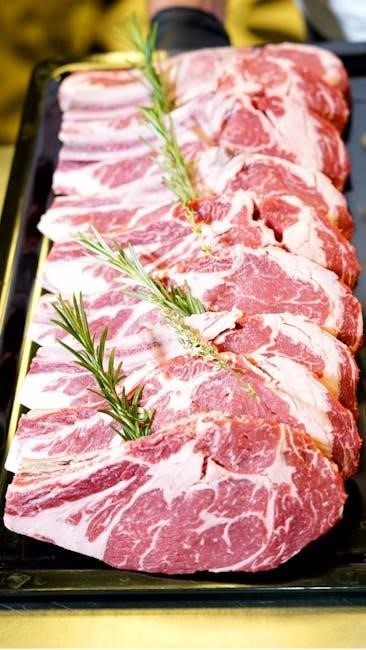
Detailed PDFs illustrate the muscle structure‚ showing how the Tenderloin sits within the Loin. Diagrams also clarify the bone structure of Porterhouse and T-Bone steaks‚ differentiating them based on the size of the Tenderloin portion. These visual aids are invaluable for butchers and cooks alike.
Tenderloin (Filet Mignon): The Most Tender Cut
Beef cuts diagrams in PDF format consistently identify Tenderloin‚ or Filet Mignon‚ as the most tender cut. These charts showcase its location within the Loin primal‚ emphasizing its minimal use. PDF guides detail its fine muscle grain and lack of connective tissue‚ contributing to its melt-in-your-mouth texture.
Visual representations within these PDFs often highlight the Tenderloin’s relatively small size compared to other cuts. Diagrams illustrate how it’s typically sold as individual steaks or a whole roast. Understanding its anatomy via these charts aids in proper trimming and cooking techniques for optimal tenderness.
Strip Steak (New York Strip): Flavor and Texture
Beef cuts diagrams‚ frequently available as PDFs‚ clearly depict the Strip Steak (also known as New York Strip) originating from the Loin primal cut. These charts emphasize its balance of flavor and texture‚ showcasing moderate marbling. PDF guides illustrate its firm‚ yet tender‚ bite‚ distinct from the Filet Mignon’s delicacy.
Visual aids within these PDFs often highlight the presence of a fat cap on one side‚ contributing to its rich flavor during cooking. Diagrams demonstrate how the grain runs lengthwise‚ influencing slicing direction for tenderness. Understanding its structure via these charts helps achieve optimal results.
Porterhouse & T-Bone Steaks: Combining Tenderloin & Strip
Beef cuts diagrams‚ often in PDF format‚ visually explain the unique composition of Porterhouse and T-Bone steaks. These charts illustrate how both cuts feature a T-shaped bone with steak from both the tenderloin and strip loin sides. PDF guides detail the key difference: the Porterhouse has a larger tenderloin portion.
These visual resources highlight the varying textures and flavors within a single steak. Diagrams showcase the marbling distribution‚ impacting tenderness and juiciness. Understanding the cut’s anatomy via these PDFs aids in proper cooking techniques‚ maximizing enjoyment of both tenderloin and strip steak qualities.
The Round Primal Cut
Beef cuts diagrams‚ frequently available as PDF downloads‚ clearly delineate the Round primal cut – the hind leg of the animal. These charts illustrate its lean nature and suitability for various cooking methods. PDF guides showcase cuts like Top Round and Bottom Round‚ detailing their specific characteristics.
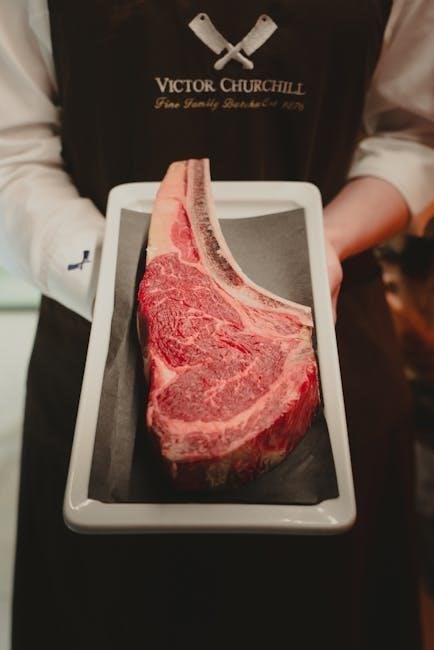
Visual representations within these PDFs emphasize the Round’s muscle structure‚ explaining why it benefits from moist-heat cooking like braising or slow roasting. Diagrams also highlight the grain direction‚ crucial for slicing against it to maximize tenderness. Understanding the Round via these resources empowers informed cooking choices.
Top Round Steak: Lean and Versatile
Beef cuts diagrams‚ often in PDF format‚ pinpoint Top Round as a remarkably lean and economical choice. These visual guides demonstrate its position within the Round primal cut‚ emphasizing its fine muscle grain. PDF resources detail its suitability for various preparations‚ from roasting and grilling to Swiss rolls and jerky.
Diagrams illustrate the importance of marinating Top Round to enhance tenderness‚ given its lower fat content. PDF charts also recommend slicing thinly against the grain for optimal texture. These resources empower cooks to maximize flavor and tenderness from this versatile‚ budget-friendly cut.
Bottom Round Roast: Ideal for Braising
Beef cuts diagrams‚ frequently available as PDF downloads‚ clearly showcase Bottom Round’s location within the Round primal. These charts highlight its tougher texture‚ making it exceptionally well-suited for slow-cooking methods like braising. PDF guides emphasize that braising breaks down connective tissues‚ resulting in a tender and flavorful roast.
Visual aids within these PDF resources demonstrate how Bottom Round benefits from long‚ moist heat. Diagrams often pair this cut with braising liquids and aromatic vegetables. They also illustrate its use in pot roasts‚ providing cooks with a clear understanding of achieving optimal results from this economical cut.
The Flank & Plate Primal Cuts
Beef cuts diagrams‚ often distributed as PDF files‚ delineate the Flank and Plate primal cuts‚ showcasing their location and unique characteristics. These visual guides highlight the relatively lean nature of these cuts and their suitability for specific cooking methods. PDF resources detail how Flank and Plate are positioned on the animal‚ influencing their texture and flavor profiles.
Detailed charts within these PDFs emphasize the importance of marinating Flank steak to enhance tenderness. They also illustrate the intense beefy flavor of Skirt steak‚ often used in fajitas. These diagrams provide a valuable resource for butchers and cooks alike‚ ensuring proper identification and preparation of these flavorful cuts.
Flank Steak: Marinade and Quick Cooking
Beef cuts diagrams in PDF format consistently emphasize the necessity of marinating Flank steak. These visual guides detail how marinades break down the muscle fibers‚ resulting in a more tender eating experience. PDF resources showcase marinade recipes and recommended marinating times for optimal flavor penetration.
Furthermore‚ these charts highlight Flank steak’s suitability for quick‚ high-heat cooking methods like grilling or pan-searing. PDFs often include temperature guidelines to ensure proper doneness. Diagrams illustrate the grain of the meat‚ advising cooks to slice against it for maximum tenderness‚ a crucial tip found within these downloadable guides.
Skirt Steak: Intense Beefy Flavor
Beef cuts diagrams‚ frequently available as PDFs‚ consistently point to Skirt steak’s remarkably intense beefy flavor profile. These charts often detail its loose muscle fibers‚ contributing to this robust taste. PDF resources emphasize that Skirt steak benefits greatly from bold marinades‚ enhancing its natural richness‚ as visually demonstrated in cut charts.
PDF guides also highlight the importance of quick cooking – searing or grilling – to prevent toughness. Diagrams illustrate the long muscle fibers‚ stressing the need to slice thinly against the grain. These PDFs often include serving suggestions‚ pairing Skirt steak with vibrant sauces and accompaniments to complement its strong flavor.
The Brisket Primal Cut
Beef cuts diagrams‚ often distributed as PDFs‚ clearly delineate the Brisket primal cut‚ showcasing its location on the cow and its substantial size. These PDF resources typically divide Brisket into the Flat Cut and Point Cut‚ visually illustrating their differing fat content and textures. Charts emphasize Brisket’s suitability for low-and-slow cooking methods like smoking or braising.
PDF guides detail how the Point Cut‚ richer in fat‚ yields incredibly tender and flavorful results‚ while the Flat Cut requires careful attention to avoid dryness. Diagrams often highlight the grain direction‚ crucial for slicing against it post-cooking. These PDFs are invaluable for understanding this challenging‚ yet rewarding‚ cut.
Brisket Flat Cut: Slow Cooking Essential
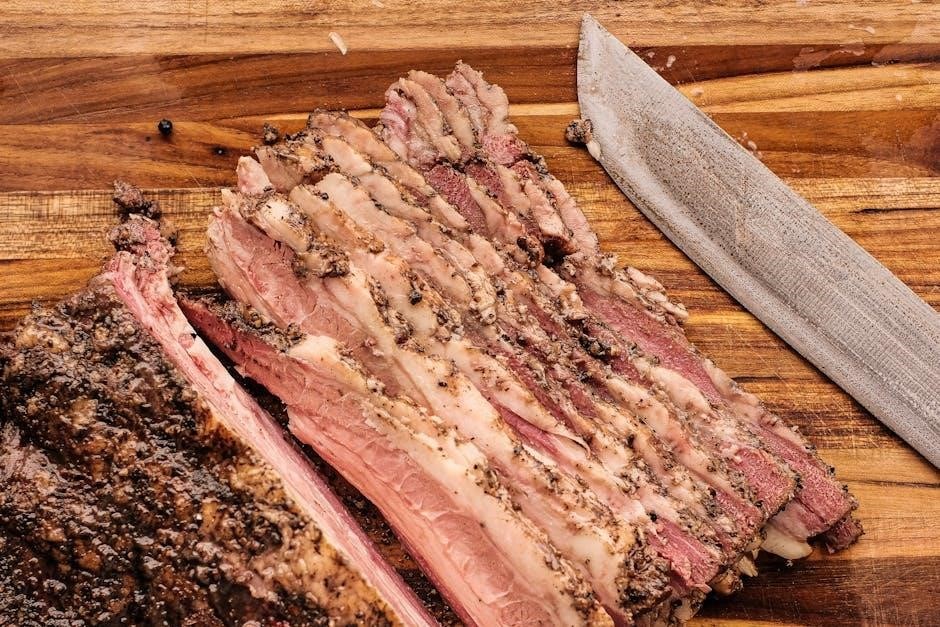
Beef cuts diagrams in PDF format consistently emphasize the Brisket Flat Cut’s need for extended‚ slow cooking. These charts illustrate its leaner profile compared to the Point Cut‚ making it prone to drying if rushed. PDF guides detail optimal cooking temperatures and times‚ often recommending braising or smoking for 12-18 hours.
Visual aids within these PDFs demonstrate proper trimming techniques to remove excess silver skin‚ enhancing tenderness. Diagrams also highlight the importance of maintaining moisture during cooking‚ often suggesting liquid additions. Understanding grain direction‚ as shown in PDFs‚ is vital for achieving tender slices.
Brisket Point Cut: Rich and Flavorful
Beef cuts diagrams‚ particularly those in PDF form‚ showcase the Brisket Point Cut as the fattier‚ more flavorful portion of the brisket. These charts visually explain its higher marbling‚ contributing to exceptional tenderness when slow-cooked. PDF guides often feature illustrations detailing the Point Cut’s location and shape within the full brisket primal.
PDF resources emphasize that this cut excels in barbecue‚ benefiting from low and slow smoking. Diagrams illustrate how the fat renders during cooking‚ basting the meat and creating a rich‚ smoky flavor. Understanding the Point Cut’s characteristics‚ as presented in PDFs‚ is key to successful brisket preparation.
Ground Beef Options
Beef cuts diagrams in PDF format frequently include sections detailing ground beef variations. These charts illustrate the lean-to-fat ratios commonly available‚ such as 75/25 (lean/fat) and regular ground beef. PDF guides explain how these ratios impact flavor and cooking suitability.
PDF resources highlight that leaner grinds are versatile for healthier dishes‚ while regular ground beef offers cost-effectiveness. Diagrams may show the source cuts used for grinding‚ influencing texture and taste. Understanding these options‚ as presented in PDFs‚ helps consumers select the best ground beef for their culinary needs.
Lean Ground Beef (75/25): Versatile for Many Dishes
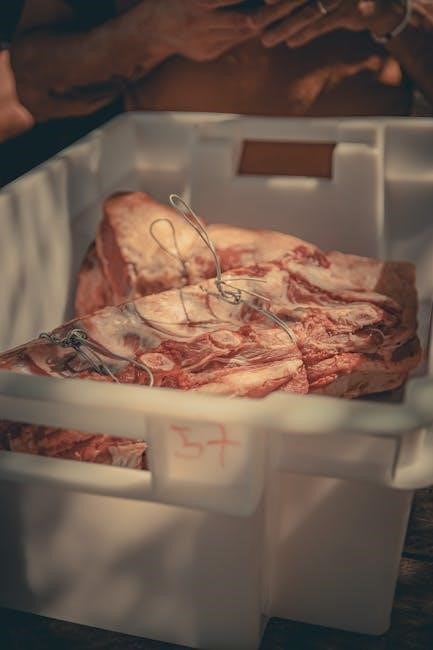
Beef cuts diagrams‚ often available as PDFs‚ detail lean ground beef (75/25) as a healthier option. These charts showcase its lower fat content‚ making it suitable for diverse recipes. PDF guides emphasize its versatility – from burgers and meatloaf to tacos and pasta sauces.
PDF resources explain that 75/25 ground beef minimizes grease during cooking‚ appealing to health-conscious consumers. Diagrams may illustrate its sourcing from leaner cuts. Understanding this option‚ as presented in PDFs‚ empowers informed choices for balanced meals‚ offering flavor without excessive fat.
Regular Ground Beef: Cost-Effective Choice
Beef cuts diagrams in PDF format frequently highlight regular ground beef as a budget-friendly option. These charts often don’t specify a precise lean-to-fat ratio‚ indicating a higher fat content. PDF guides demonstrate its suitability for dishes where flavor trumps leanness‚ like chili or shepherd’s pie.
PDF resources explain that the affordability of regular ground beef stems from utilizing various cuts during processing. Diagrams may not detail specific sourcing. Choosing this option‚ as shown in PDFs‚ allows for flavorful meals without a premium price‚ making it a practical choice for many households.
Utilizing Beef Cuts Charts (PDFs)
Beef cuts diagrams in PDF format are invaluable tools for both novice and experienced cooks. These charts visually represent primal and subprimal cuts‚ aiding in identification and understanding. PDF guides often include cooking method suggestions tailored to each cut’s characteristics‚ enhancing meal planning.
Downloaded PDFs frequently detail marbling‚ tenderness‚ and optimal cooking temperatures. Utilizing these resources allows for informed purchasing decisions and maximizes flavor. Many PDFs‚ like those from Certified Angus Beef‚ offer detailed explanations‚ ensuring successful beef preparation and a deeper appreciation for this versatile protein.
Finding Reliable Beef Cuts Diagrams Online
Locating trustworthy beef cuts diagrams requires discerning sources. The Certified Angus Beef (CAB) website (http://www.certifiedangusbeef.com/cuts/) provides comprehensive‚ detailed charts in PDF and interactive formats. University extension offices and reputable butcher shops also offer valuable resources.
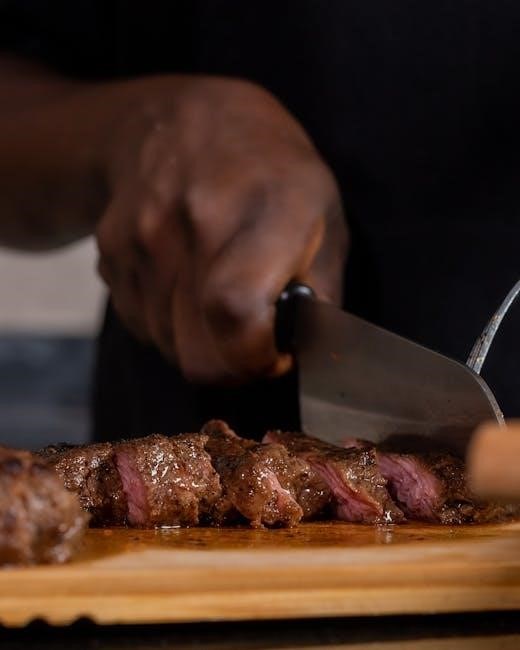
Beware of overly simplistic or inaccurate diagrams. Look for charts that clearly label primal and subprimal cuts‚ showcasing muscle location and potential uses. PDF downloads from established organizations ensure accuracy and reliability‚ aiding in informed selection and preparation of various beef cuts for optimal culinary results.
Cooking Methods Based on Beef Cut
Beef cuts dictate optimal cooking methods for tenderness and flavor. Tender cuts like tenderloin and strip steak excel with quick‚ high-heat techniques – grilling‚ searing‚ or broiling. Tougher cuts‚ such as chuck or brisket‚ benefit from slow‚ moist heat methods like braising‚ stewing‚ or smoking.
Diagrams often correlate cuts with suggested preparations. Leaner cuts like top round require careful cooking to avoid dryness. Utilizing a PDF chart alongside a recipe ensures appropriate technique‚ maximizing enjoyment and achieving perfectly cooked beef every time‚ regardless of the chosen cut.
Resources for Further Information (CAB‚ etc.)
Certified Angus Beef (CAB) provides extensive resources‚ including detailed beef cuts diagrams in PDF format‚ alongside cooking guides and educational materials. Their website (certifiedangusbeef.com) is a valuable starting point for understanding different cuts and their characteristics.
Additionally‚ university extension services and meat industry associations offer comprehensive charts and information. Online butcher shops frequently provide downloadable PDF guides. Exploring these resources enhances your knowledge‚ allowing informed decisions when selecting and preparing various beef cuts‚ supplementing visual diagrams.
Understanding Beef Grading Systems
Beef grading‚ encompassing both quality and yield‚ significantly impacts cut selection. PDF beef cuts diagrams often correlate cuts with USDA grades – Prime‚ Choice‚ and Select – influencing tenderness and marbling. Understanding these grades‚ visually represented alongside cut locations on a diagram‚ is crucial.
Higher grades (Prime) generally yield more tender cuts like ribeye and tenderloin. Yield grades (A‚ B‚ C) indicate carcass leanness. Combining grade knowledge with a beef cuts diagram empowers informed purchasing‚ ensuring optimal flavor and value based on intended cooking methods and personal preference.
Beef Cuts for Specific Cuisines
PDF beef cuts diagrams become invaluable when tailoring selections to diverse cuisines. For example‚ Korean BBQ frequently utilizes thinly sliced ribeye or skirt steak‚ easily identified on a detailed diagram. Conversely‚ French stews often benefit from the chuck’s robust flavor‚ pinpointed on primal cut charts.
Mexican cuisine favors flank steak for fajitas‚ while Italian dishes might employ sirloin. A comprehensive diagram‚ coupled with culinary knowledge‚ allows cooks to choose cuts that complement specific flavor profiles and cooking techniques‚ maximizing the dish’s potential.
Tips for Selecting the Right Cut
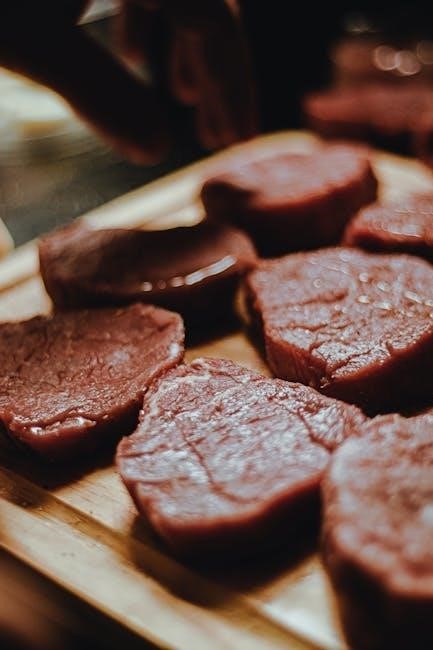
Utilizing a beef cuts diagram PDF is crucial for informed selection. Consider your cooking method: tender cuts like tenderloin excel with quick‚ high-heat techniques‚ while tougher cuts like chuck require slow braising.
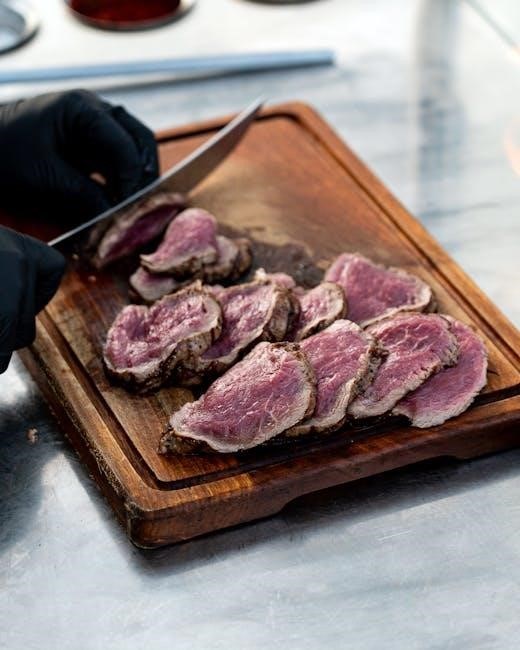
Pay attention to marbling – the flecks of fat within the muscle – as it contributes significantly to flavor and tenderness‚ clearly visible on detailed diagrams. Understand primal cut locations; rib cuts are generally more flavorful‚ while round cuts are leaner. A diagram helps visualize these differences.
Storing and Handling Beef Cuts
Proper storage maintains beef quality‚ informed by understanding cuts via a beef cuts diagram PDF. Refrigerate promptly; use or freeze within a few days. Vacuum sealing extends freezer life significantly‚ preserving flavor and texture.
Thaw frozen beef safely in the refrigerator‚ never at room temperature. When handling‚ prevent cross-contamination by using separate cutting boards and utensils for raw beef. Refer to diagrams to identify cuts and their specific storage needs‚ ensuring optimal freshness and safety.
Successfully navigating beef selection hinges on understanding diverse cuts‚ readily visualized through a comprehensive beef cuts diagram PDF. These resources empower informed decisions‚ aligning cuts with desired cooking methods and flavor profiles.
From primal breakdowns to specific steak identifications‚ mastering this knowledge elevates culinary experiences. Utilizing diagrams unlocks potential‚ transforming ordinary meals into exceptional ones. Continued reference to these guides ensures confidence in selecting‚ preparing‚ and enjoying the full spectrum of beef offerings.