Napkin folding, a delightful art, transforms simple cloth into elegant displays; numerous PDF guides detail sixteen distinct folds, from basic pyramids to complex peacock designs.
These resources, including a 1797 Japanese text with fifty diagrams, showcase techniques using materials like paper and napkins, offering varying difficulty levels for all skill sets.
Whether seeking Christmas-themed ideas or intricate origami-inspired creations, readily available tutorials and diagrams unlock the potential for stunning table settings and festive presentations.
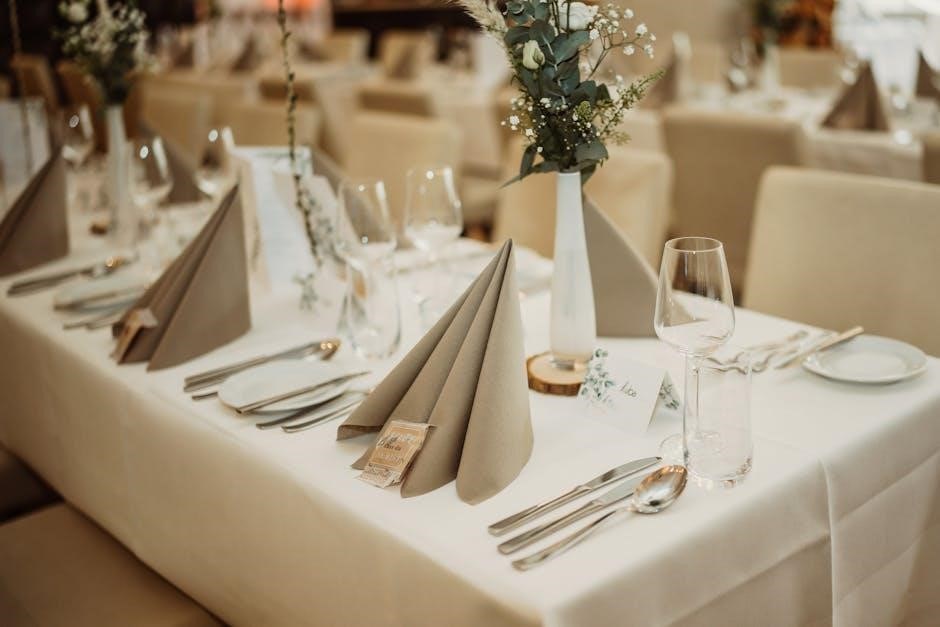
Historical Context of Napkin Folding
Historically, the practice of folding napkins evolved from purely functional purposes to elaborate displays of status and artistry, with roots stretching back centuries. While early uses focused on cleanliness, the art truly blossomed with the rise of formal dining and aristocratic traditions.
Remarkably, a Japanese book from 1797 provides a glimpse into this history, containing fifty detailed diagrams illustrating various folding techniques – a testament to the early sophistication of this craft. This ancient text demonstrates that napkin folding wasn’t merely a Western invention, but a globally practiced art form.
The inclusion of precise hand positions in some diagrams, like figure 16, suggests a desire for standardized execution and a high level of refinement. Modern resources, including numerous PDF guides, build upon this legacy, offering instructions for everything from simple pyramid folds to complex designs like the peacock and bishop’s hat. These contemporary guides, alongside online tutorials, ensure the continuation and evolution of this time-honored tradition.
The availability of these resources, detailing sixteen different types of folds, underscores the enduring appeal of transforming everyday items into objects of beauty.
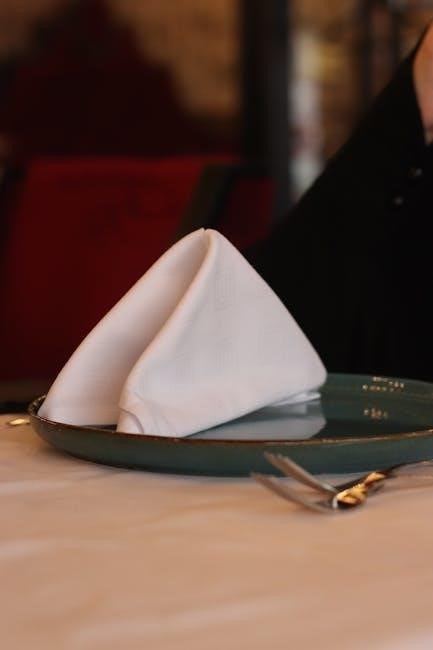
Benefits of Learning Napkin Folding
Learning napkin folding offers a surprising array of benefits, extending far beyond simply enhancing table presentation. It’s a creative outlet, fostering mindfulness and dexterity, and providing a satisfying sense of accomplishment with each completed fold.
Access to readily available PDF guides and online tutorials democratizes this art, making it accessible to individuals of all skill levels. Whether mastering a simple pyramid or tackling an intricate lily in a wine glass, the process encourages patience and attention to detail.
Furthermore, napkin folding elevates dining experiences, transforming ordinary meals into special occasions. The visual appeal of a beautifully folded napkin adds a touch of elegance and thoughtfulness, impressing guests and creating a memorable atmosphere.
Resources detailing sixteen different folds, alongside historical texts like the 1797 Japanese book, demonstrate the enduring cultural significance of this practice. It’s a skill that connects us to traditions while allowing for personal expression and festive creativity, especially during holidays with Christmas-themed ideas.
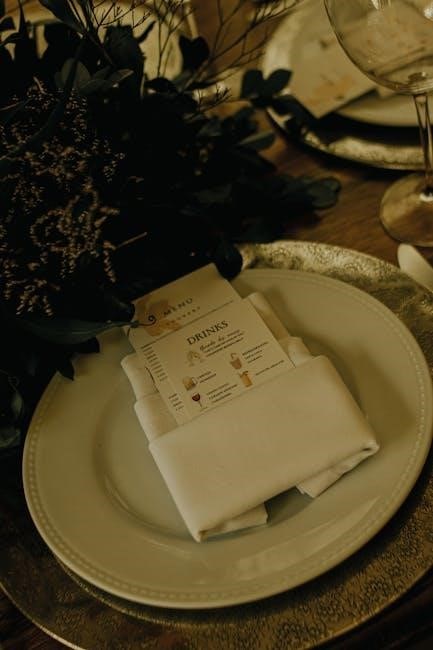
Basic Napkin Folds
Basic napkin folds, detailed in numerous PDF guides, provide a foundation for more complex designs; the pyramid, pocket, and simple band folds are excellent starting points.
These foundational techniques, often illustrated with step-by-step diagrams, offer accessible entry points into the art of transforming cloth into elegant table accents.
Mastering these simple folds unlocks a world of creative possibilities, enhancing any dining experience with a touch of refined presentation and style.
The Pyramid Fold
The Pyramid Fold, a cornerstone of basic napkin folding, is frequently detailed within readily available PDF guides and online tutorials, making it exceptionally accessible for beginners.
This classic design, often featured amongst sixteen different fold types, begins with a flat napkin and involves a series of simple folds to create a symmetrical, triangular shape resembling a pyramid.
Typically, the process involves folding the napkin in half diagonally, then bringing the two bottom corners up to meet the top corner, followed by folding the resulting shape in half again.
The resulting pyramid stands upright, adding a touch of elegance to any place setting; its simplicity belies its visual impact, making it a popular choice for everyday dining or more formal occasions.
Numerous diagrams and step-by-step instructions, found in both modern and historical texts like the 1797 Japanese folding book, ensure anyone can master this fundamental technique with ease and confidence.
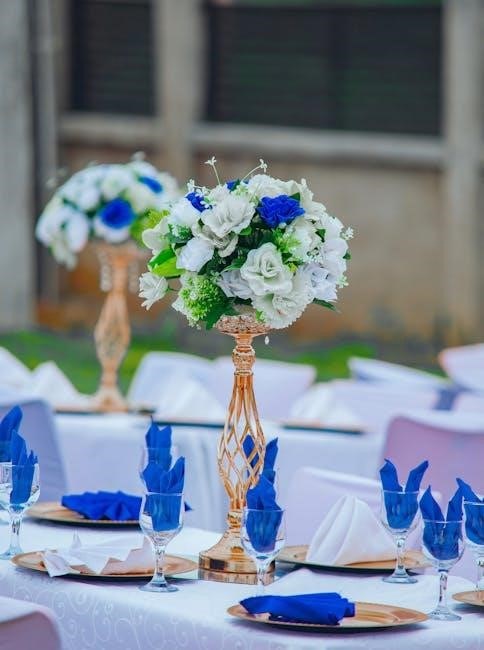
The Pocket Fold
The Pocket Fold, a versatile and practical napkin folding technique, is commonly illustrated in PDF guides showcasing a range of sixteen different napkin styles, offering a functional and decorative element to table settings.
This fold creates a convenient pocket, ideal for holding cutlery – a fork, knife, or even a small menu – adding a touch of sophistication and practicality to the dining experience.
The process generally involves folding the napkin in half, then folding the top layer down about two-thirds of the way, creating a flap. The sides are then folded inwards, and the entire napkin is folded in half again.
The resulting pocket is neat and secure, enhancing the presentation of the place setting; it’s a popular choice for both casual and formal dining, demonstrating attention to detail.
Historical origami and napkin folding texts, including the 1797 Japanese book, alongside contemporary resources, provide clear diagrams for mastering this elegant and useful fold.
The Simple Band Fold
The Simple Band Fold represents an accessible entry point into the world of napkin folding, frequently detailed within comprehensive PDF guides that illustrate sixteen diverse napkin styles, making it ideal for beginners.
This technique involves minimal steps, typically beginning with a flat napkin, then folding it inwards from both sides towards the center, creating a band-like appearance.
The resulting band can be adjusted in width, offering a degree of customization; it’s a quick and easy method to elevate a table setting without requiring advanced skills.
Often used as a base for adding decorative elements like ribbons or napkin rings, the Simple Band Fold provides a clean and understated elegance, suitable for various occasions.
Resources, including historical texts like the 1797 Japanese folding book, and modern tutorials, demonstrate its simplicity, making it a foundational technique for aspiring napkin artists.
Intermediate Napkin Folds
PDF guides showcase techniques like the Candle and Fan Folds, requiring more precision; the Bird of Paradise, with seven steps, elevates skill levels beautifully.
These builds upon basic folds, demanding careful execution for impressive results.
The Candle Fold
The Candle Fold, a classic intermediate technique, transforms a simple napkin into an elegant, upright “flame.” PDF instructions detail a process creating this shape, often beginning with a flat, face-down napkin.
Typically, the napkin is folded in half diagonally, then repeatedly rolled from the pointed corners towards the center, forming a cylindrical base.
This roll is then carefully stood upright, resembling a candle. Variations exist, some involving additional tucks or folds to secure the shape and create a more defined “flame” effect at the top.
Numerous online tutorials and diagrams provide step-by-step visual guidance, making it accessible for those with some folding experience. Mastering this fold adds a touch of sophistication to any table setting, and is frequently featured in comprehensive napkin folding PDF resources.
It’s a popular choice for formal dinners and special occasions, demonstrating a refined aesthetic with relatively simple execution.
The Fan Fold
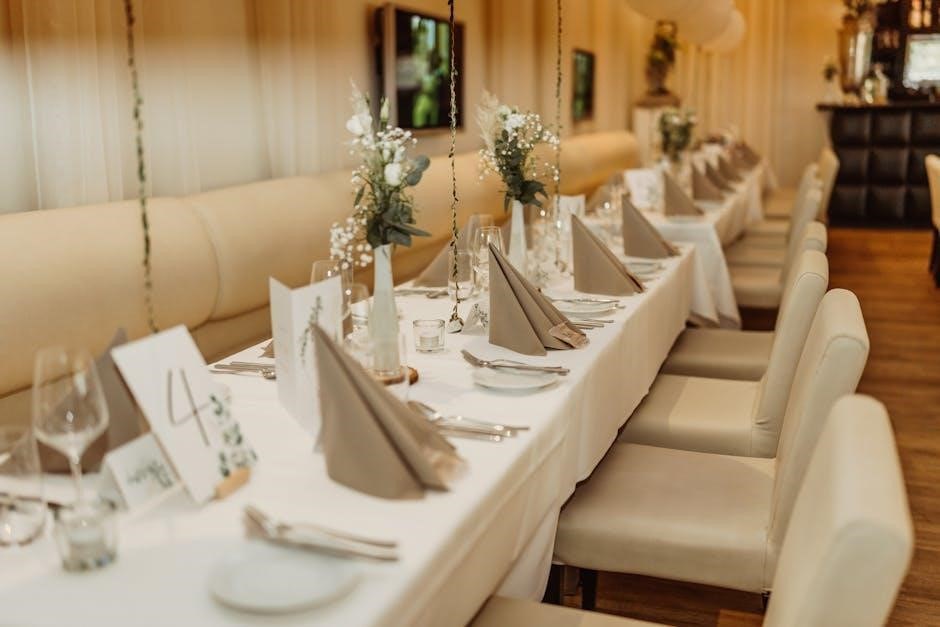
The Fan Fold, a visually striking technique, creates a decorative, pleated effect resembling an open fan. Detailed PDF guides illustrate this fold, typically starting with the napkin laid face down.
The process involves making a series of precise, accordion-style folds along the length of the napkin, creating a series of narrow pleats.
Once fully pleated, the napkin is folded in half, bringing the two short ends together, and secured, often with a napkin ring or a carefully tucked corner.
Instructions often span six steps, emphasizing the importance of consistent pleat width for a symmetrical and aesthetically pleasing result. Comprehensive PDF resources frequently include diagrams showcasing different variations, such as a standing fan.
This fold is versatile, suitable for both casual and formal settings, and adds a touch of elegance to any table presentation, readily found in numerous napkin folding technique PDFs.
The Bird of Paradise Fold
The Bird of Paradise Fold is an impressive and elegant napkin presentation, resembling the exotic flower. Numerous PDF guides detail this technique, often considered intermediate in difficulty.
The process typically involves seven distinct steps, beginning with folding the napkin into a triangle, then carefully manipulating the corners and layers to create the distinctive petal-like shapes.
These PDF instructions emphasize precise folding and tucking to maintain the structural integrity of the “bird,” ensuring the petals stand upright and create a realistic appearance.
Variations exist, but the core principle remains consistent: transforming a flat napkin into a three-dimensional, floral-inspired design.
Detailed diagrams within these PDF resources are crucial for understanding the complex folds, making it accessible to those willing to practice. It’s a stunning addition to any formal dining experience, easily learned from available technique PDFs.
Advanced & Decorative Napkin Folds
PDF guides reveal intricate designs like the Lily and Peacock, demanding precision; the Bishop’s Hat requires skill, elevating table settings with complex, artistic folding techniques.
The Lily in a Wine Glass Fold
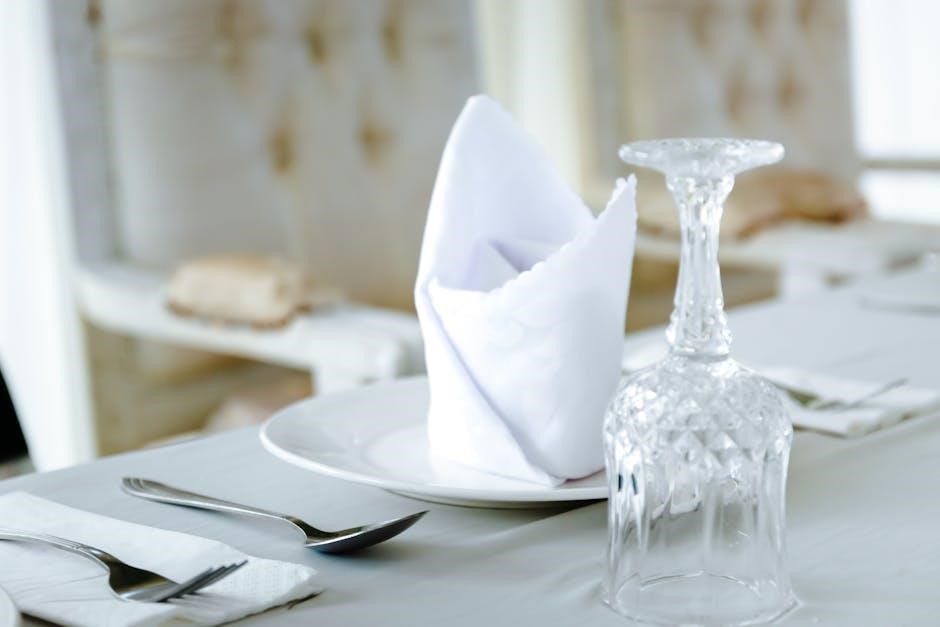
The Lily in a Wine Glass Fold represents a pinnacle of decorative napkin artistry, frequently detailed within comprehensive PDF guides on napkin folding techniques. This advanced fold transforms a simple square of fabric into an elegant floral display, perfectly suited for formal dining occasions.
Instructions typically involve a series of precise folds and inversions, creating petal-like structures that, when carefully arranged, resemble a blossoming lily. The complexity necessitates patience and a keen eye for detail, often requiring multiple steps to achieve the desired aesthetic. Diagrams within these guides are crucial for visualizing each stage of the process.
Successfully executing this fold results in a stunning presentation – the “lily” can be delicately inserted into a wine glass, adding a touch of sophistication to each place setting. Mastering this technique demonstrates a high level of skill and dedication to the art of table presentation, making it a favorite among experienced napkin folders.
The Peacock Fold
The Peacock Fold, a showstopping design, is a testament to the artistry achievable through napkin folding techniques, often extensively illustrated in detailed PDF guides. This intricate fold aims to mimic the majestic plumage of a peacock, creating a visually striking centerpiece for any table setting.
The process involves numerous precise folds, rolls, and tucks, demanding patience and dexterity. These guides typically break down the complex steps into manageable diagrams, guiding the folder through each stage of creating the fan-like tail feathers. Achieving symmetry and a balanced appearance is key to a successful peacock fold.
The resulting display is a dramatic and elegant addition to formal events or festive gatherings. Mastering this fold signifies a high level of skill and a dedication to transforming ordinary napkins into extraordinary works of art, elevating the dining experience for all.
The Bishop’s Hat Fold
The Bishop’s Hat Fold, a classic and refined design, is frequently detailed within comprehensive napkin folding techniques PDF resources. This elegant fold creates a tall, pointed shape reminiscent of a bishop’s traditional headwear, adding a touch of sophistication to any formal table arrangement.
Instructions found in these guides typically involve a series of precise folds and tucks, building upon basic techniques to achieve the distinctive peaked form. Symmetry and crisp lines are crucial for a polished appearance, requiring careful attention to detail throughout the folding process.
Often included amongst sixteen different types of napkin folds, the Bishop’s Hat is a popular choice for celebratory occasions and formal dinners. Successfully executing this fold demonstrates a refined skill level and an eye for elegant table presentation, enhancing the overall dining ambiance.
Resources for Napkin Folding
PDF guides and online tutorials offer diverse napkin folding techniques, from simple to advanced; a 1797 Japanese book provides fifty diagrams for inspiration.
Tavins Origami Diagrams also provides downloadable instructions, while various sites showcase festive and classic folding styles for elegant table settings.
Availability of PDF Guides & Diagrams
Numerous PDF guides and diagrams are readily accessible online, catering to all skill levels in napkin folding. A particularly noteworthy resource is a historical Japanese book dating back to 1797, containing a remarkable fifty diagrams illustrating various folding methods. This ancient text details techniques for manipulating not only napkins but also folding paper and wrapping paper, showcasing the long-standing tradition of this art form.
These downloadable resources often include step-by-step instructions, ranging from simple folds requiring minimal effort to highly intricate designs demanding patience and precision. One example is a detailed diagram spanning 86 pages and 93 steps, recommended for intermediate folders using Biotope ocher paper, estimating a significant time commitment for completion.
Furthermore, documents detailing sixteen different napkin folds, including popular choices like the pyramid and fan, are easily found. These PDFs provide visual aids and clear instructions, making it easier to learn and replicate beautiful napkin arrangements for any occasion.
Online Tutorials and Video Demonstrations
Complementing PDF guides, a wealth of online tutorials and video demonstrations provide dynamic learning experiences for aspiring napkin folding enthusiasts. These visual resources break down complex techniques into manageable steps, allowing learners to follow along at their own pace. Many platforms host demonstrations for the candle, fan, and bird of paradise folds, showcasing the process from start to finish.
These videos often highlight subtle nuances in technique, offering a clearer understanding than static diagrams alone. Resources like Tavins Origami Diagrams offer downloadable instructions alongside visual guides, enhancing the learning process. The availability of these tutorials means anyone, regardless of prior experience, can master elegant napkin presentations.
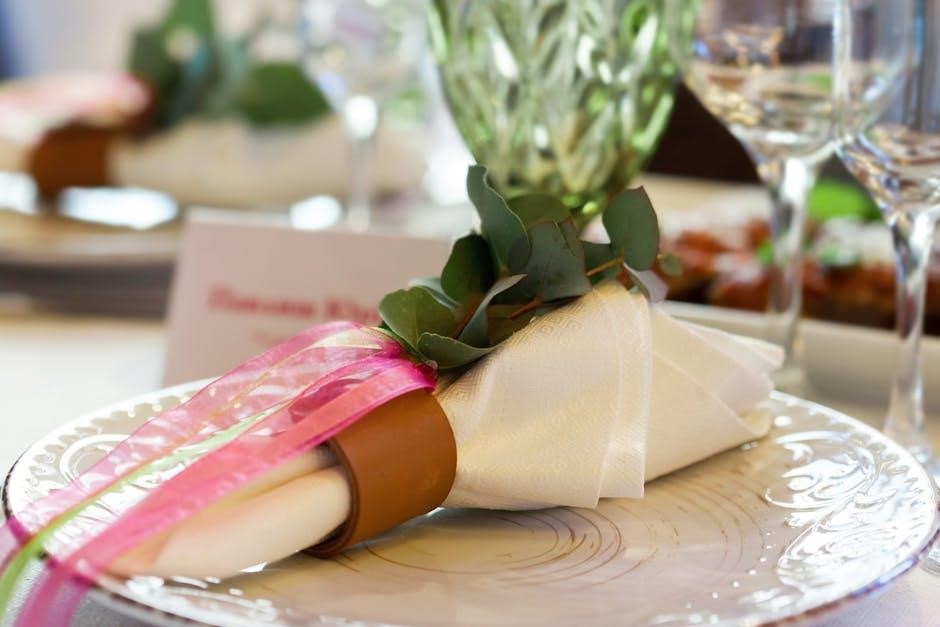
Furthermore, specialized content caters to seasonal events, such as Christmas napkin folding ideas, providing inspiration for festive table settings. These readily accessible online resources democratize the art of napkin folding, making it enjoyable and achievable for all.
Historical Origami & Napkin Folding Texts (1797 Japanese Book)
Delving into the history of napkin folding reveals a rich tradition, exemplified by a remarkable Japanese book published in 1797. This ancient text contains fifty meticulously crafted diagrams, illustrating techniques for folding not only napkins but also various papers and materials like wrapping paper. The diagrams detail methods for creating intricate designs, showcasing the artistry of the time.
The book, a significant precursor to modern PDF guides, provides step-by-step instructions – spanning 93 steps across 86 pages – for complex folds, demanding a “high intermediate” skill level. It even specifies recommended paper types, such as Biotope ocher, and estimates folding times.
This historical document demonstrates that the art of folding extends beyond mere practicality, representing a sophisticated craft with deep cultural roots. It’s a testament to the enduring appeal of transforming simple materials into beautiful forms.